Why LeStallion Notebooks for Journaling Can Transform Your Daily Productivity
I have tried more notebooks than I care to count. Moleskines, Leuchtturms, cheap spirals from the drugstore, even a few handmade leather options from Etsy. Each one promised to be the one that would finally make journaling stick for me. And each one ended up half-used on a shelf, gathering dust. The problem was never my commitment or lack of ideas. It was the notebook itself. When the paper feels wrong, the layout fights you, or the binding falls apart, the habit dies. That is where LeStallion notebooks for journaling come in. They are built differently, and that difference matters more than you might think.
What Makes a Notebook Actually Work for Journaling
Journaling is a personal practice. Some people write stream of consciousness every morning. Others use structured prompts or bullet lists. Some draw, paste in clippings, or keep a simple gratitude log. A good notebook has to handle all of that without getting in the way. The paper has to take fountain pen ink without bleeding through. The spine has to lie flat when you open it to the middle. The cover has to survive being tossed into a bag or backpack.
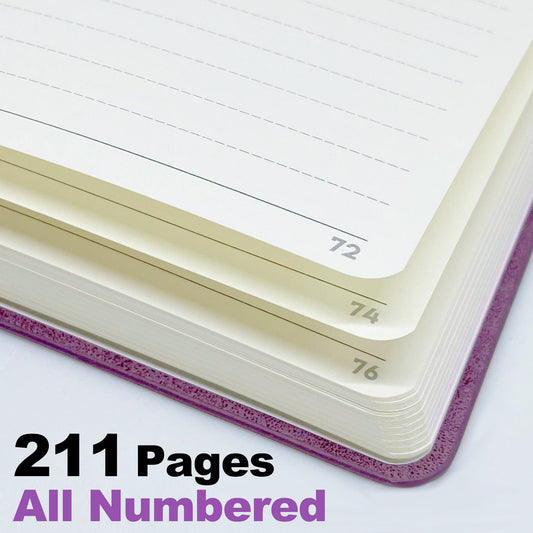
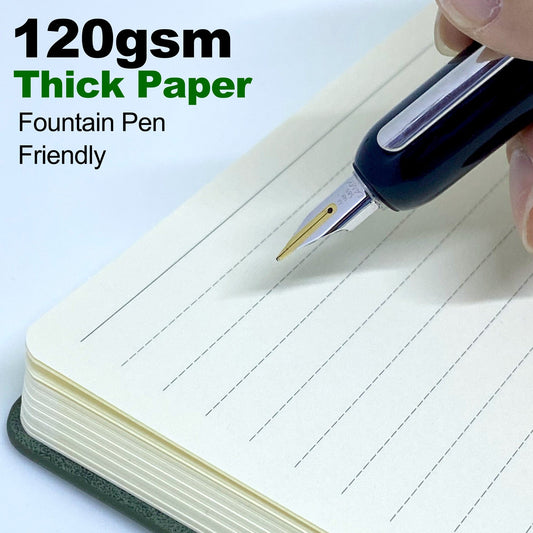
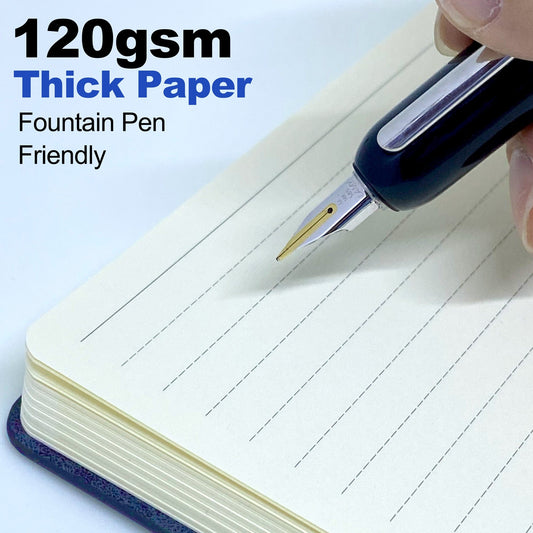
Most notebooks compromise on one of these things. They use thin paper to keep costs down, or they bind the pages so tightly that you have to crack the spine to get it to open. LeStallion notebooks for journaling avoid those compromises. The paper is thick enough that you can write on both sides without ghosting. The binding is sewn, not glued, so pages stay put. And the cover is flexible but durable, like a well-worn jacket. These details add up to a notebook that feels like it belongs in your hands, not like a piece of office supplies.
The Layout Question
Blank pages give you freedom but no structure. Ruled pages give you structure but no freedom. Dot grid has become the favorite for many journalers because it offers both: you can write straight lines, draw tables, or sketch diagrams, all without the distraction of solid lines. LeStallion uses a dot grid that is subtle enough to disappear when you write, but visible enough to guide you when you need it. The dots are spaced at five millimeters, which works well for small handwriting and for larger script. You can also use them as a guide for drawing boxes or columns if you like to organize your thoughts visually.
I have kept a bullet journal for about three years now, and the dot grid is the only layout that has ever felt right. With ruled paper, I always felt like I had to fill every line. With blank paper, my handwriting drifted downhill. The dots give me just enough structure without making me feel boxed in. LeStallion's version of this is clean and consistent. No weird spacing, no faded dots, no pages where the grid is printed at an angle. It is the kind of attention to detail that you notice only when it is wrong, and you appreciate when it is right.
How the Notebook Encourages Consistency
The biggest challenge in journaling is not finding the right words. It is showing up every day. A notebook that feels good in the hand makes that easier. When the paper is smooth and the pen glides, writing becomes a sensory pleasure rather than a chore. And when the notebook lies flat on your desk, open to the current page, it invites you to sit down and write.
I have found that the physical quality of a notebook directly affects how often I use it. If the cover is too stiff, I leave it on the shelf. If the pages feel cheap, I hesitate to write in them because I know the ink will bleed. If the binding cracks after a month, I lose trust in the notebook and eventually abandon it. LeStallion notebooks avoid all of these pitfalls. They are designed to be used, not just looked at. The cover has a slight give to it, so you can fold it back easily. The paper has a bit of texture, what some call tooth, which gives the pen a satisfying resistance. These small things add up to a notebook that you actually want to open.
Practical Uses Beyond the Morning Pages
Journaling does not have to mean writing long entries every day. It can be a tool for productivity, for planning, for reflection, or for creative problem solving. I use my LeStallion notebook for several different things, all in the same book. The first few pages hold a yearly overview with goals and intentions. Then I have monthly spreads where I track habits and set priorities. The bulk of the notebook is daily logs, where I write a few lines about what happened, what I learned, and what I want to do tomorrow. And in the back, I keep a collection of ideas and sketches for projects.
Having all of this in one notebook keeps me organized without requiring multiple systems. I do not have to remember where I put my project notes or my habit tracker. It is all there, in one place, in a notebook that I carry with me almost everywhere. The durability of the cover means it can handle the wear and tear of daily use. The sewn binding means I do not have to worry about pages falling out after a few months. And the dot grid means I can switch between writing and drawing without changing notebooks.
A Few Things to Keep in Mind
No notebook is perfect for everyone. If you prefer lined paper or a very rigid cover, LeStallion might not be your first choice. The paper, while thick, is not heavy enough for wet media like watercolor or heavy ink washes. It handles fountain pens and rollerballs well, but if you use a very wet nib, you might see a bit of show-through on the other side. Also, the notebook has a moderate number of pages, around 200, which is enough for several months of daily use but not a full year. If you write a lot, you will need to buy a new one every few months. That is a trade-off, but I see it as a feature: it gives you a natural stopping point to review what you have written and start fresh.
Another thing to consider is the size. LeStallion offers a few sizes, but the most common is around A5, which is big enough to write comfortably but small enough to fit in a bag. If you prefer a pocket-sized notebook for quick notes, you might want a smaller option. But for journaling, A5 is the sweet spot. It gives you room to write without feeling like you are filling a legal pad.
The Role of the Notebook in Building a Habit
I have seen many people try to start journaling with a fancy app or a digital tool. They set up templates, reminders, and tags. And then they stop using it after a week. There is something about writing by hand that makes the practice stick. The physical act of putting pen to paper, of turning a page, of seeing your own handwriting accumulate over time, creates a connection that a screen cannot replicate. A good notebook makes that connection stronger.
LeStallion notebooks for journaling are designed with this in mind. They are not trying to be the most luxurious notebook on the market, or the cheapest, or the most feature-packed. They are trying to be the notebook that you actually use. The one that sits on your desk and calls you to write. The one that you look forward to opening at the end of the day. That is a subtle goal, but it is the most important one. A notebook that stays closed is useless. A notebook that gets used, even if it is not perfect, is invaluable.
Final Thoughts
If you are looking for a notebook to start or improve your journaling practice, I encourage you to think about what will keep you coming back. It is not the brand name or the price. It is the feel, the layout, the durability. It is the small details that make writing a pleasure rather than a task. LeStallion notebooks for journaling deliver on those details. They are not a magic solution, and they will not write your entries for you. But they will remove the friction that often stops people from sticking with the habit. And sometimes, that is all you need.